Case Study
Multi-Tenant Cloud PBX & Billing Platform
Manage telecom accounts, extensions, numbers, routing, queues and usage-based billing from a unified web platform.
Status: Production
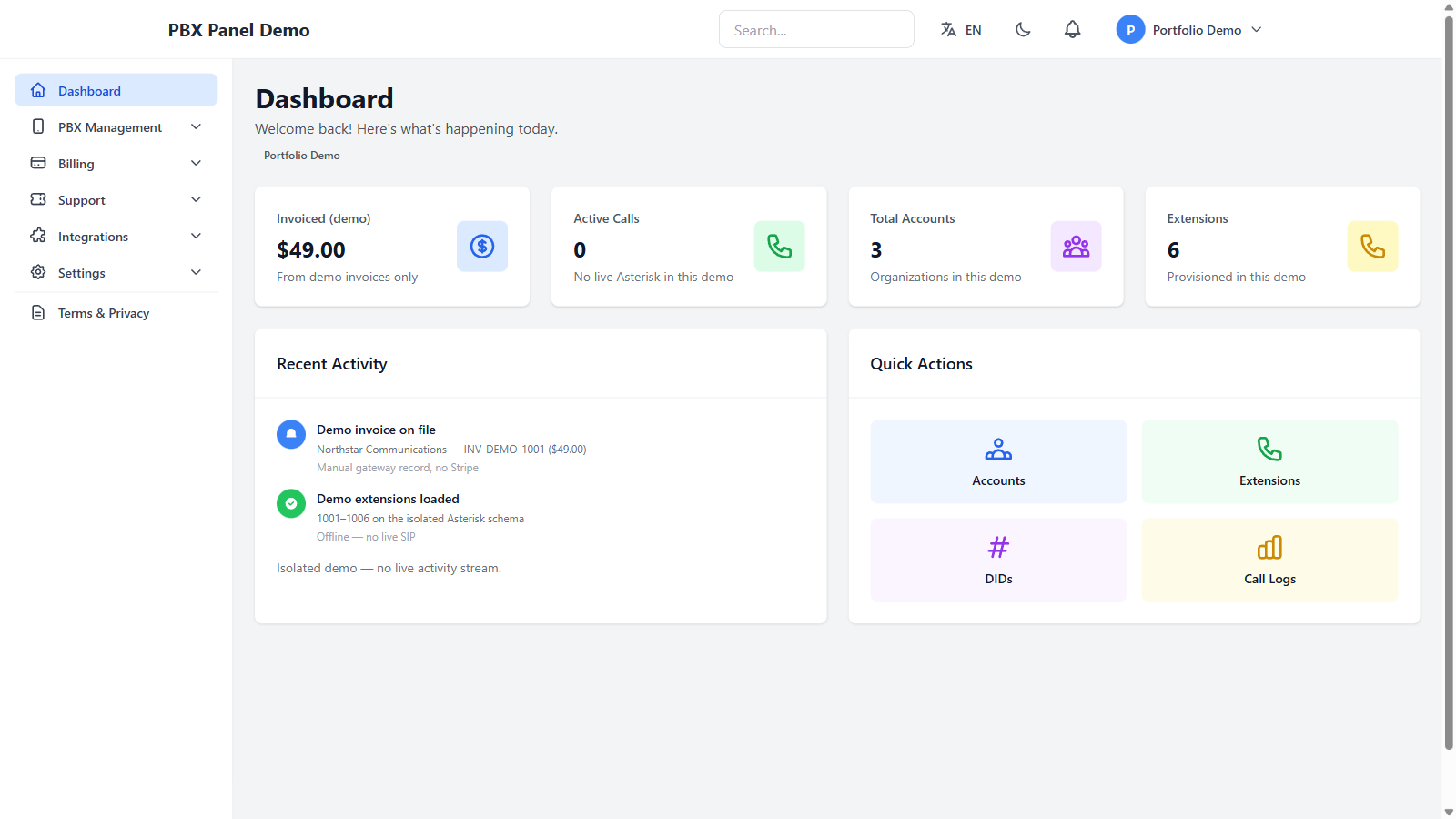
Production system — screenshots shown here use an isolated portfolio demo with fictional data. No production systems were accessed.
Problem
VoIP operators often split day-to-day work across a PBX, a billing tool, and separate support processes. That makes provisioning slow, billing easy to get wrong, and customer self-service hard to offer.
Solution
Built a role-based operations panel that lets staff and resellers manage telephony configuration, usage, billing, and support in one product, with a customer-facing portal and a browser softphone.
Key Features
- • Multi-tenant account structure with super-admin, admin, reseller, and client roles
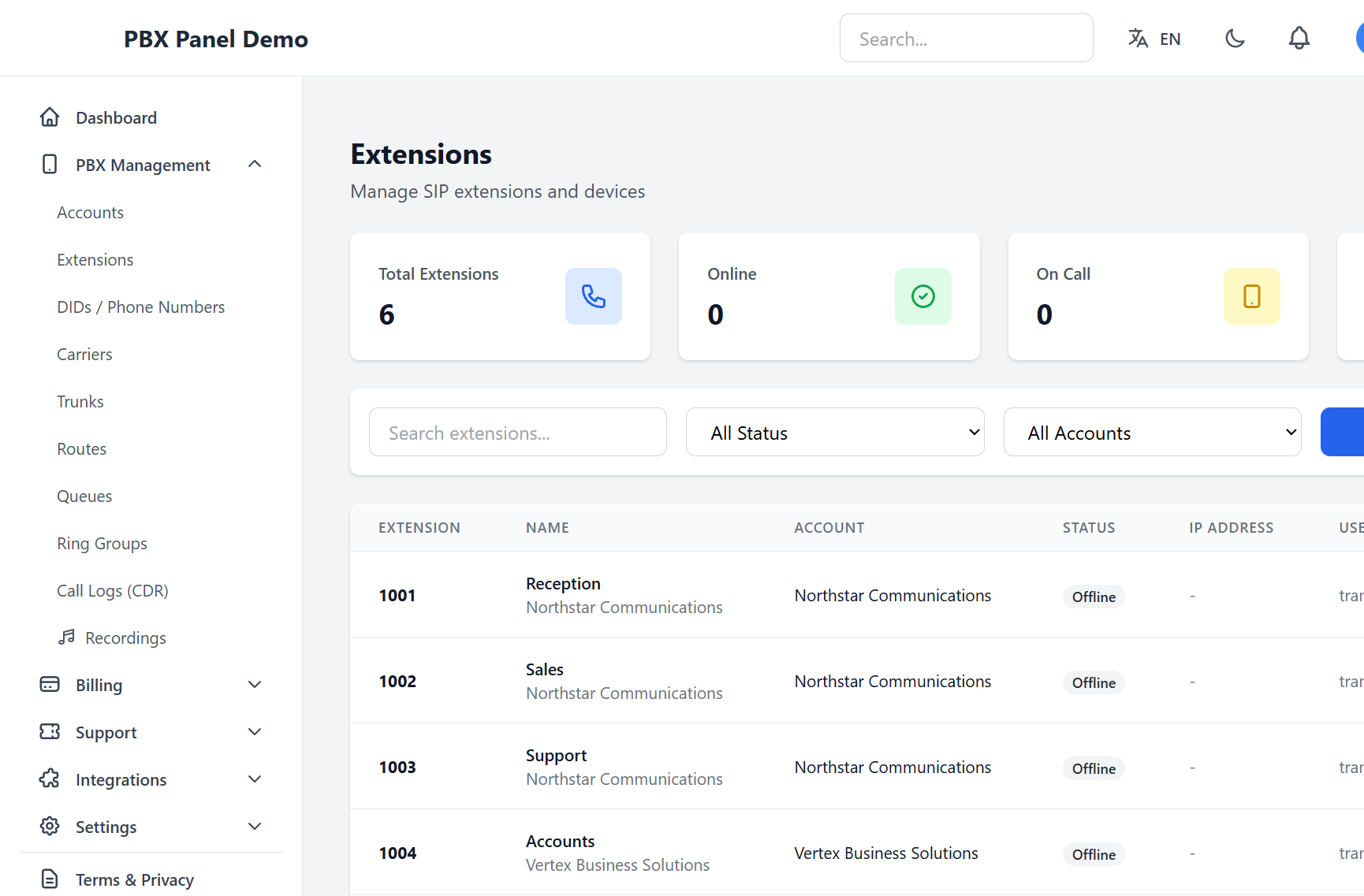
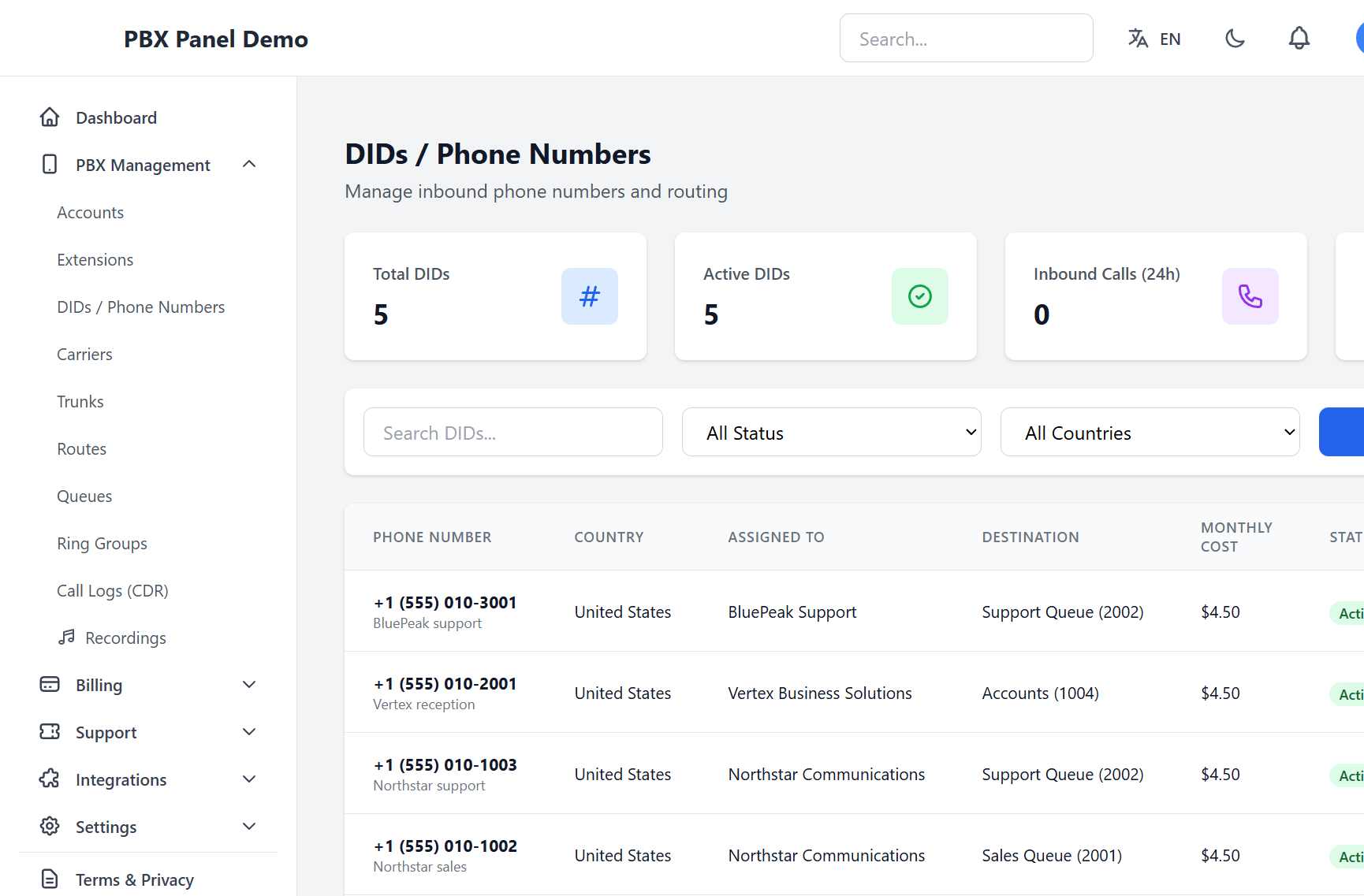
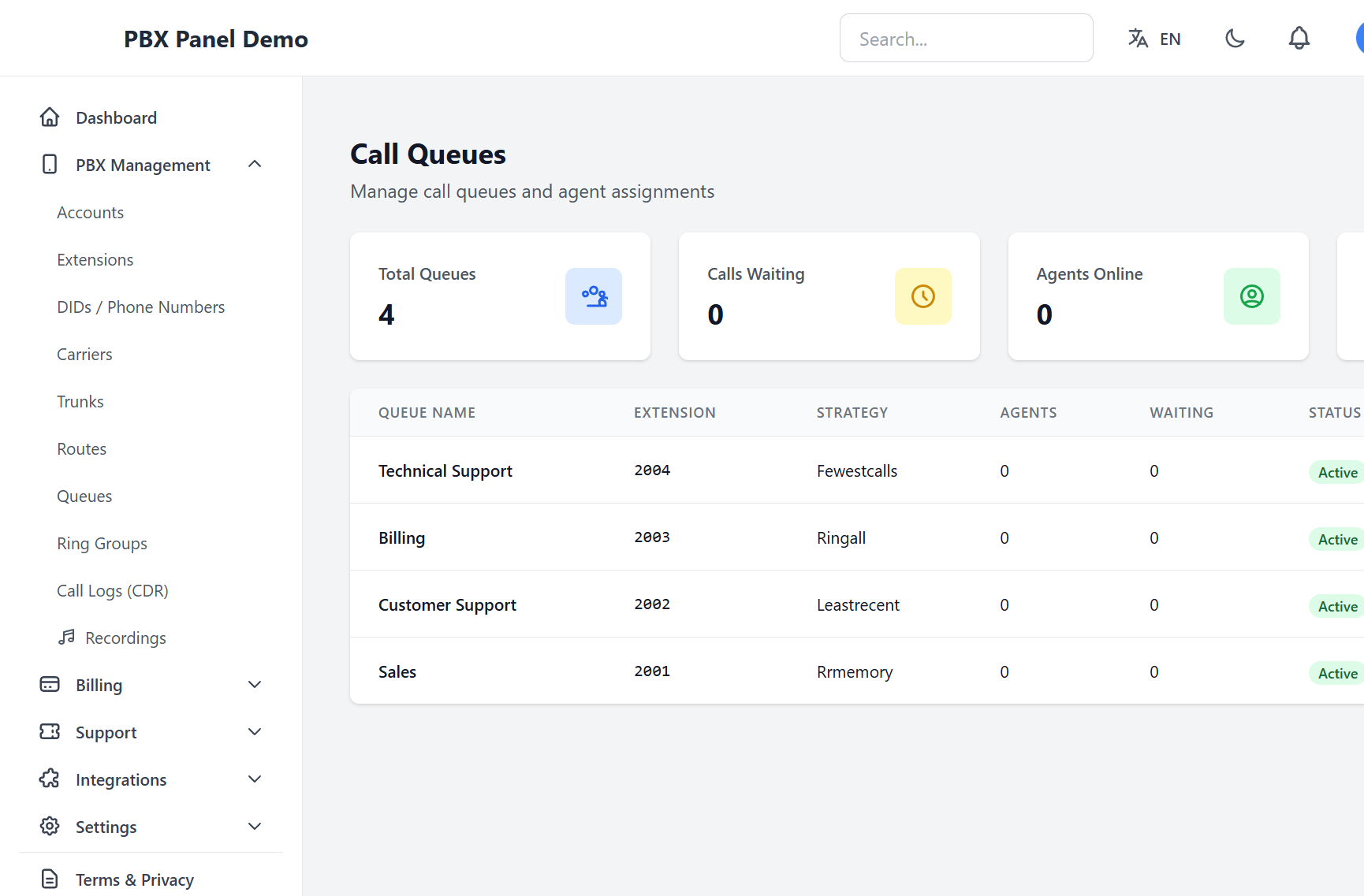
- • Provisioning for extensions, DIDs, carriers, trunks, routes, queues, and ring groups
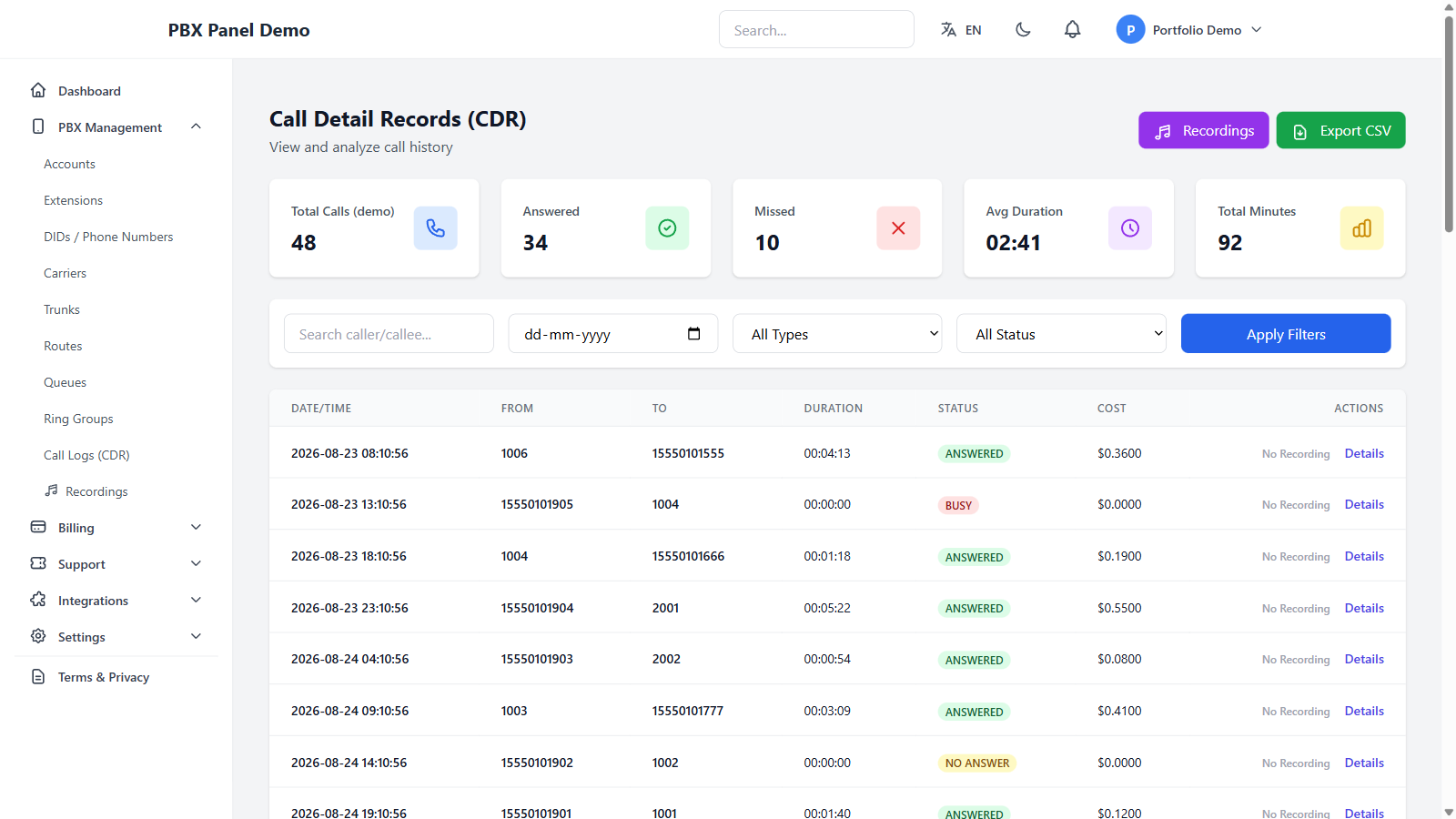
- • Call detail records, call recordings access, and operational dashboards
- • Prepaid and postpaid billing, payments, auto-recharge, tax, and reporting
- • Support tickets, knowledge base, and customer self-service
- • API access, webhooks, and CRM integration points for Salesforce, HubSpot, and Zoho
- • Browser-based WebRTC softphone so users can place calls without a desk phone
Technology
Technical Architecture
The product is a Laravel web application with a Blade admin interface and a versioned API for programmatic access. Telephony configuration is managed from the panel and applied to Asterisk. Usage and billing data are kept in dedicated databases so operational records, live PBX state, and financial data can be handled separately. Authentication uses session login for the panel and token-based API access. Payments are handled through Stripe webhooks rather than storing card details in the application.
Challenges
- • Keeping PBX configuration, live call data, and billing data consistent across separate operational databases.
- • Giving resellers and clients useful self-service without exposing carrier credentials or other tenants.
- • Supporting browser calling, which depends on secure signaling and media path setup rather than a traditional SIP desk phone.
Who This Is For
VoIP providers, resellers, and businesses that need a hosted PBX with billing and self-service instead of a standalone FreePBX-style admin.
Outcome
Built to give VoIP operators a single panel for provisioning, usage, billing, and customer self-service. Measurable production results are not currently documented.
Product Screens
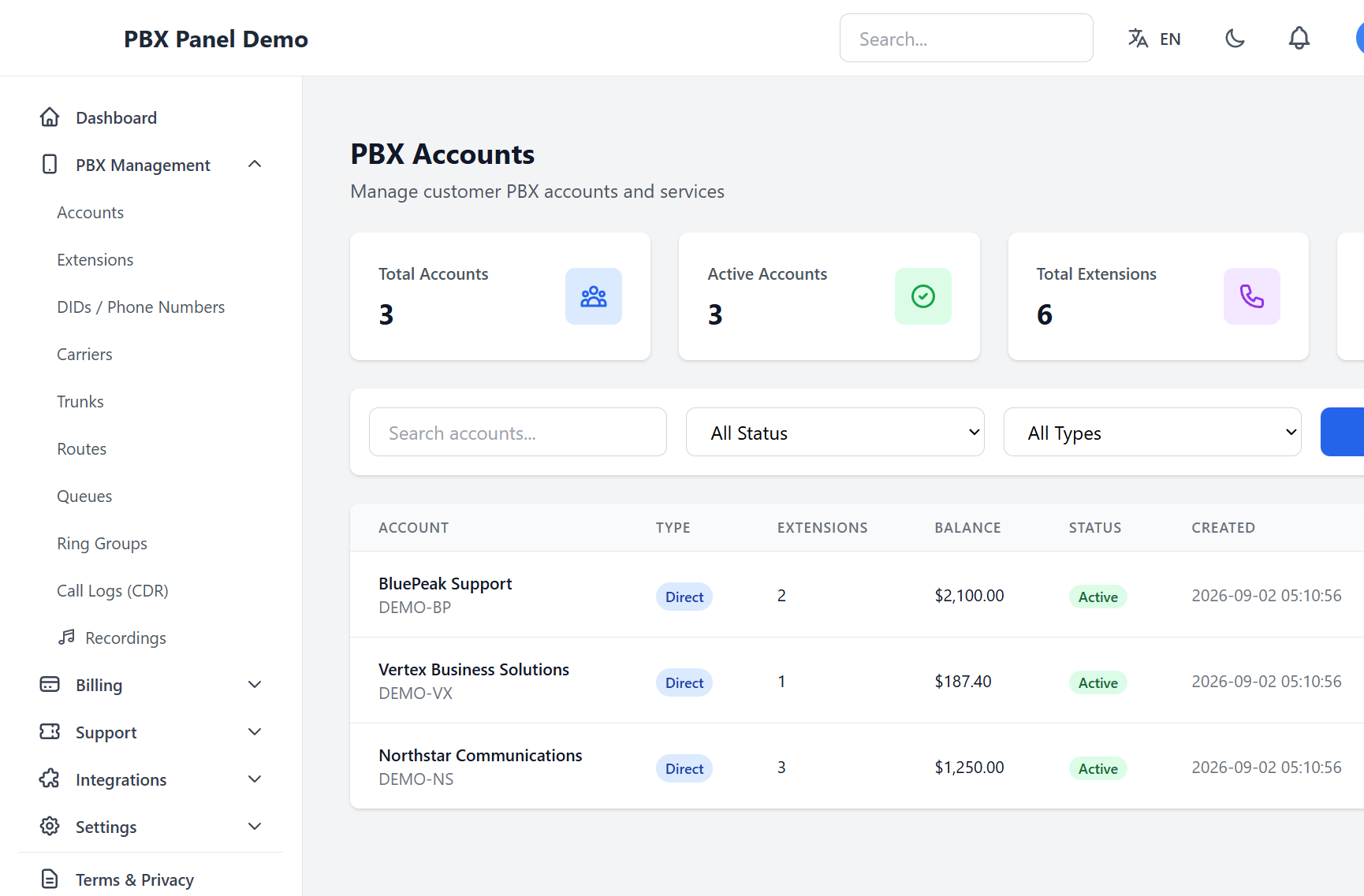
Additional screens from the same isolated portfolio demo.